Fire Safety Management System

Fire Safety Management System: managing your building's safety

In the event of a fire, detection alone is not enough. We must act immediately, automatically, and in a coordinated manner.
The Fire Safety Management System is the system that controls all safety measures in a building: evacuation, isolation, and smoke extraction.

It is this system that turns an alert into concrete actions to protect people and infrastructure.
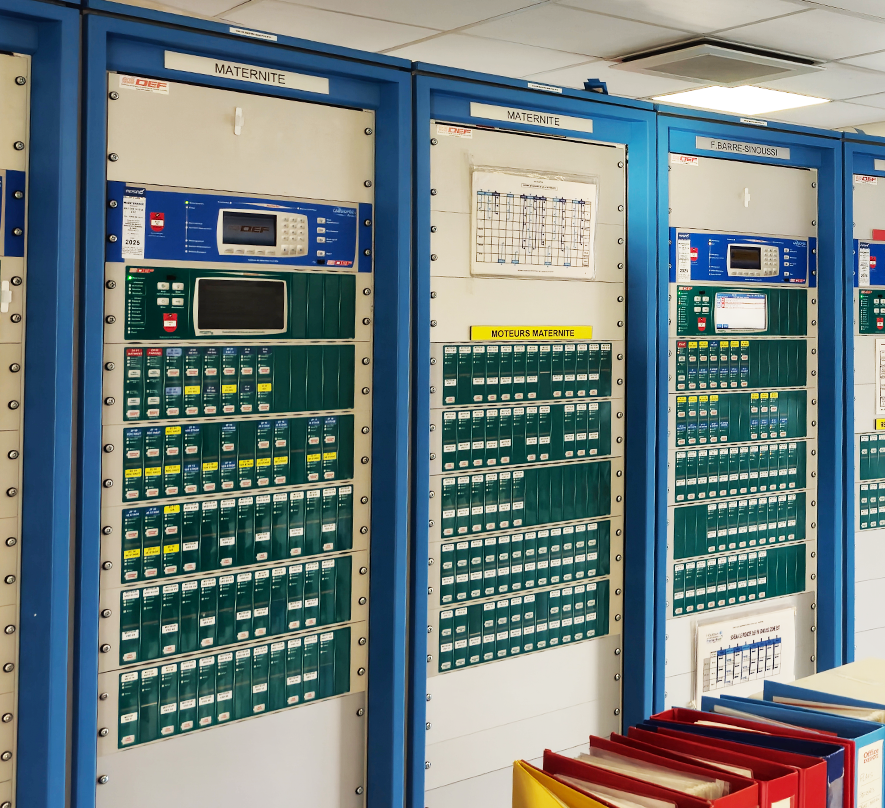
cmsi mise en securite
cmsi def mise en securite 1024x668 1

What is a Fire Safety Management System?

The Fire Safety Management System encompasses all the equipment and devices used to ensure the safety of a building, either automatically upon detection of a fire or manually. It serves as the essential link between the fire alarm and the concrete actions taken to protect occupants and installations.

In practical terms, the Fire Safety Management System directs and coordinates several key functions. It triggers the alarm to facilitate evacuation, unlocks emergency exits to allow occupants to leave, and controls the isolation of the building by closing fire doors and dampers to limit the spread of the fire, and can shut down certain technical systems to reduce the risk of the fire spreading.

It also controls the smoke exhaust system to remove smoke that is toxic to people, improve visibility for the evacuation of occupants, and help rescue teams work more effectively.
All of these actions are carried out automatically and in a coordinated manner to ensure a rapid and appropriate response to the situation from the very first seconds of the incident.
Specifically, the Fire Safety Management System executes the fire safety scenarios defined for the building by controlling devices located throughout the site.

desenfumage 1024x668 1

The Fire Safety Control Centre: the driving force behind the Fire Safety Management System

At the core of the Fire Safety Management System, the Fire Safety Control Centre provides centralised management of fire safety operations, including the monitoring and control of information (faults, positions, etc.).

Based on manual commands or information from the fire detection system, it activates fire safety procedures.

The Fire Safety Control Centre handles safety management actions. It sends commands to devices located throughout the building, which carry out the actions defined to protect the occupants and limit the spread of the emergency.

  • Fire Safety Control Centre

    The core of the fire safety system for initiating, coordinating, and managing safety procedures

    The Fire Safety Control Centre is the centre piece of the Fire Safety System.
    It centralises information from the fire detection system and automatically controls all safety devices.

  • Mechanical smoke extraction

    Extract smoke to protect lives and preserve structures.

    During a fire, smoke is the main hazard: it reduces visibility, carries toxic gases, and accelerates the spread of the fire.

  • Emergency exit management

    In the event of a fire or any other situation requiring the evacuation of a building, proper management of emergency exits is critical.

systmee de mise en securite 1024x668 1

Safety measures managed by the Fire Safety Management System

The fire safety management system relies on a set of devices located throughout the building, known as manually operated safety devices, which enable protective measures to be effectively implemented.

This equipment does not make decisions. They are activated by the Fire Safety Control Centre, which sends them the necessary commands based on the defined fire scenario. They work directly on the building’s systems to ensure the safety of the occupants and limit the spread of the fire.

In particular, they allow users to control fire compartmentation systems, activate smoke exhaust systems in the premises, or manage access to facilitate evacuation. Their proper functioning determines the overall effectiveness of the fire safety system.

:

Framework regulations for the Fire Safety Management System

The implementation of a fire safety management system is not merely a technical decision. It is part of a strict regulatory framework that sets requirements for design, installation, and maintenance to ensure the safety of people and property.

These requirements vary depending on the type of building, its use, and its risk level, but are based on common standards that govern all fire safety systems in France.

  • Decree of 25 June 1980 (public access buildings)

    Safety regulations applicable to public-access buildings require the implementation of a fire safety system appropriate to the building’s risks. In particular, it defines the requirements for evacuation, smoke extraction, and isolation

  • Labour Code

    The Labour Code requires employers to ensure the safety of individuals on company premises. This includes the installation of detection, alarm, and safety systems tailored to the risks present on the site

  • NF S 61-931 Standard

    This standard serves as the technical framework for fire safety systems. It defines the design rules, categories of fire protection systems, and operational requirements, making it possible to tailor the level of protection to the type of building.

  • NF S 61-932 Standard (Fire Safety Management System)

    Specific to fire safety management systems, this standard governs the installation and organisation of safety functions, including the control of activated devices and the management of safety zones.

  • NF S 61-933 Standard (maintenance)

    It oversees the operation and maintenance of fire safety systems, requiring regular inspections to ensure that the equipment continues to function properly over time.

Risks associated with inadequate safety measures

A failure in the fire safety management system can compromise the entire system and have immediate consequences for the safety of people and installations.

Ineffective evacuation

A malfunctioning alarm or inaccessible exits can delay or prevent the evacuation of occupants.

Rapid spread of fire

Ineffective isolation facilitates the spread of fire from one area of the building to another.

Smoke buildup

A malfunctioning smoke exhaust system reduces visibility and increases the risk to people.

Emergency exits unavailable

A failure to unlock or a blockage of access points may compromise the safety of the occupants.

Failure of automatic actions

Improper operation of equipment prevents fire safety procedures from being carried out.

Regulatory noncompliance

A non-compliant system may result in the operator being held liable in the event of an accident.

Your sectors

Technology tailored to each of your constraints

Every sector has its own constraints, risk levels and regulatory requirements. DEF designs fire safety solutions that adapt to any environment, ensuring performance, compliance and business continuity.

Request customised support

Contact

DEF Assistant

DEF Assistant

Let’s talk about your project

The assistant is typing…

Answers generated by artificial intelligence from the DEF website’s content: please check important information with our teams. Do not share personal information.